
News
From Progressive to Bari Weiss: My Journey Through Red-Pilling


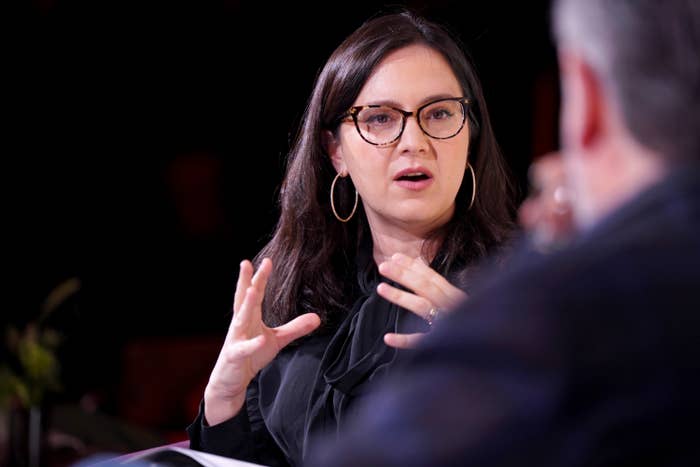
Leigh Vogel / Getty Images
I first heard Bari Weiss’ voice in November 2024, just a week after the U.S. presidential election. A friend had sent me an episode of Weiss’ podcast, “Honestly.” As I tackled household chores, I popped in my AirPods with a healthy dose of skepticism.
“She makes it clear why Trump got elected,” my friend’s text read. “Idk, it just makes you feel better.”
As a lifelong progressive, I was wary of the source. And yet, I desperately wanted to feel better because I felt absolutely awful. The conditions were perfect for an escape. Perhaps even a pill?
How does someone get red-pilled? I’m not sure that’s even the right way to phrase it. I don’t believe anyone is “forced” into it. We choose to take red pills. The real question we should be asking is why.
In political circles, being red-pilled refers to an “awakening” that causes someone to abandon liberal values in favor of conservatism, far-right ideologies, or even conspiracy theories.
I never expected this to happen to me. I have been a staunch liberal for as long as I can remember. I can still recall my parents bemoaning George W. Bush’s election over drinks in 2000 when I was only seven years old. I filed their frustrations away as my own.
By high school, I was a self-proclaimed feminist—a choice that felt organic and necessary. At the elite Chicago private school where I grew up as a faculty kid, boys rated girls on a scale of 1 to 10. We lived in a constant state of anxiety over our rankings.
We watched for “food babies” in our American Apparel dresses, fueled by a culture that was competitive and insecure. I knew these behaviors weren’t natural; they were products of systemic patriarchy.
As one of only three girls in my AP U.S. History class, I loved challenging my male classmates—boys destined for the Ivy League and Wall Street. I envied their confidence. I dived into feminist theory and filled my mind with Simone de Beauvoir quotes, ready to take on the world.
However, I never quite knew where I stood. Boys mocked me as a “bra burner,” yet seemed to respect my fire. Other girls gave me sympathetic looks. My rage was often seen as embarrassing, but I learned it could be mitigated. Being young and articulate protected me from the “Karen” label often pinned on vocal liberal women.

Courtesy of Emily Graf
The author in 2026
I moved to Boulder, Colorado, in 2018, where political ambivalence seems to be in the water. Voting is often dismissed by the locals as participating in a broken system. Initially, I was dubious of this “it’s-all-one” mindset, but I was also intrigued by their calmness. I wondered if I could be less rattled. I eventually embraced healing modalities like meditation and prayer, which helped me find some peace.
What does this have to do with Bari Weiss and the Free Press? Everything. As the 2024 election approached, the progressive platform felt like an endless slog toward doom—climate collapse, fascism, and the rollback of rights. I argued for Kamala Harris until my face burned, but a friend told me I was just a person who “causes friction.” That comment haunted me.
After Trump won, I was distraught. I started wondering if my anxiety was worth it. I began to crave a life that was “frictionless.” The world had always told me that was a better way to live, and I was starting to believe it.
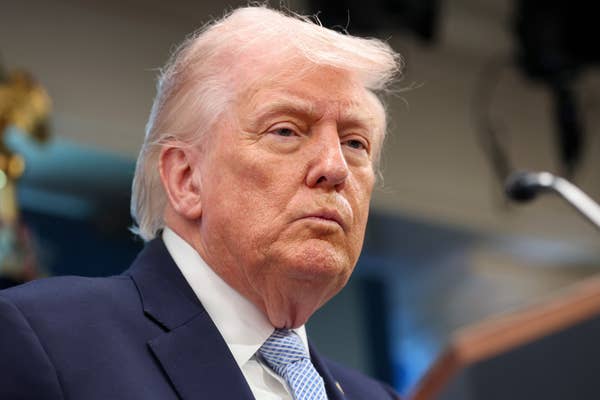
Anna Moneymaker / Getty Images
That was my headspace when I finally hit play on a Weiss podcast episode titled, Why Trump Won.
Her voice was cool, professional, and intimate. “If you were only watching cable news, you’d be shocked,” she asserted. “But if you were reading the Free Press, you probably weren’t surprised.”
I warmed to her immediately, charmed by her undeniable charisma. By the end of the episode, I felt a massive weight lift. She offered comfort to the broken-hearted, and I was her target audience.
It takes only seconds to swallow a pill, but it took years for me to reach a place where I actually wanted it.

Noam Galai via Getty Images
Bari Weiss at a Free Press Book Club event in New York City in November 2024.
I fell in love with Weiss’ perspective instantly. She seemed like me: a skeptic of mainstream politics seeking a “third way.” She wasn’t a blustery commentator like Alex Jones; she was a former New York Times editor and a gay woman. She told me the blame for the country’s problems lay with the Left, and maybe Trump’s win wasn’t a total disaster.
I started evangelizing. I sent her podcast to everyone, including my NPR-loyal parents. I felt a rebellious thrill, though my family’s responses eventually dwindled to polite silence.
My husband wasn’t spared, either. He paused an episode five minutes in, noting the strong Zionist leanings. I waved him off, high on the feeling that I was finally seeing through “liberal BS” and engaging with the other side.
It is well-documented that progressive women are exhausted. We are the demographic most likely to protest and the most likely to be targeted by MAGA rhetoric. By the time I found Honestly, I was tired of bailing out the Titanic with a teaspoon. Weiss provided the relief I craved.
The show became my “glass of wine”—a mix of lightness and sedation. This medium builds trust quickly, a factor that significantly influenced the 2024 election.
On a diet of Weiss’ content, my social interactions changed. I found myself nodding along when people criticized Harris’s platform while giving Trump a pass on his history.
For every humanitarian crisis or political concern, Honestly had a tidy rebuttal. The famine in Gaza? Overhyped. Trump’s authoritarianism? Just “Trump Derangement Syndrome.”

Saeed Jaras / Getty Images
Weiss argued that elite universities poison minds and that we should focus on “love of family and country.” She wrote that DEI programs should end for good. I began to wonder if my own education was just “woke” brainwashing rather than critical thinking.
She framed the election as the “NYT-MSNBC industrial complex” versus “renegade types” like Elon Musk and Joe Rogan. I began to see these figures not as dangerous, but as courageous dissidents. I stopped listening to my usual progressive podcasts and began to drift into the quiet of apathy.
I didn’t buy every single take, but Weiss makes sense to a frustrated mind. Progressive rhetoric can be self-righteous. With Weiss as an ally, I could dismiss the whole mess as a lost cause. As Christopher Rufo described it, the Free Press is a “beautiful off-ramp” for center-left Democrats.
White women are often susceptible to “vicarious power”—gaining privilege through proximity to powerful men. While marginalized groups, especially Black women, consistently show up for intersectional causes, white women have the luxury of retreating into our whiteness when we get tired.
I now see Weiss using the Phyllis Schlafly playbook: spreading conservative ideology while collecting power from the elite. She once joked at a Federalist Society speech that it was fine if they didn’t support her marriage, as long as they all wanted lower taxes.
Initially, I didn’t see the red flags. As David Klion noted, liberal institutions produced Bari Weiss, just as they produced me. We spoke the same language—or so I thought.
Eventually, cracks appeared. Whether it was her stance on Israel, her coverage of California fires that ignored climate change, or her CBS appearances, the facade began to slip.
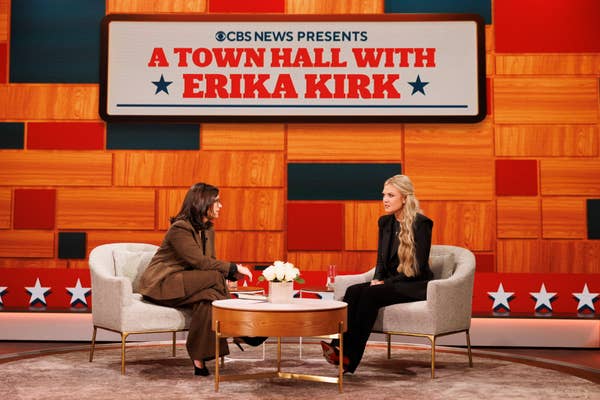
Cbs Photo Archive / Getty Images
Then I watched John Oliver’s takedown of Weiss and laughed. My gut told me, This is real. Like my early turn to feminism, this wasn’t just an intellectual shift; it was my body reorienting toward the truth. I had to ask myself: where is my integrity?
I used to dismiss people who were red-pilled, but now I understand. We aren’t fools; we are overstimulated and exhausted creatures looking for a cure.
When I took the “red pill,” I was self-medicating my intolerance for the current state of U.S. politics. Constant doomscrolling is its own kind of pill—a stimulant of panic that renders us just as ineffective as apathy.
Since moving away from Weiss, I’ve become more intentional with my media. I still listen to NPR and BBC, but I balance it with real-world action. The dry Colorado heat reminds me that climate action matters. Tragedies in the streets remind me that justice matters.
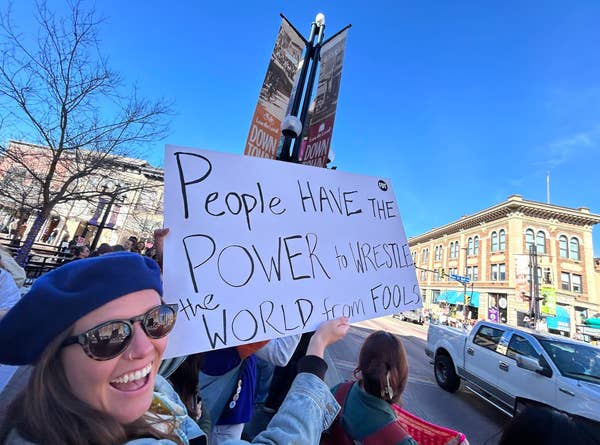
Courtesy of Emily Graf
The author at a recent ICE protest in Boulder, Colorado.
Looking back at my exhaustion, I realize that movements take time. The suffrage and civil rights movements took decades and centuries. Our current struggles are no different. Systemic oppression still exists, and it may grow stronger under the current administration.
The fight for equality is messy and disappointing, but I want to be part of it. This requires faith, a voice, and commitment—practices far more stabilizing than a pill.
I’m disappointed that I let myself be fooled. I now see Weiss’ mission as driving a wedge between centrists and progressives. While I still read the occasional takedown, my energy is now focused on fortifying the movement. When I feel the urge to give up, I remember who actually benefits from my despair—and exactly what is at stake.
Emily Graf is a writer, poet, and editor living in Colorado. She is the acquiring editor at Sentient Publications, and her work has been featured most recently in New Feathers Anthology. Find more original essays on her Substack at emilygraf.substack.com.

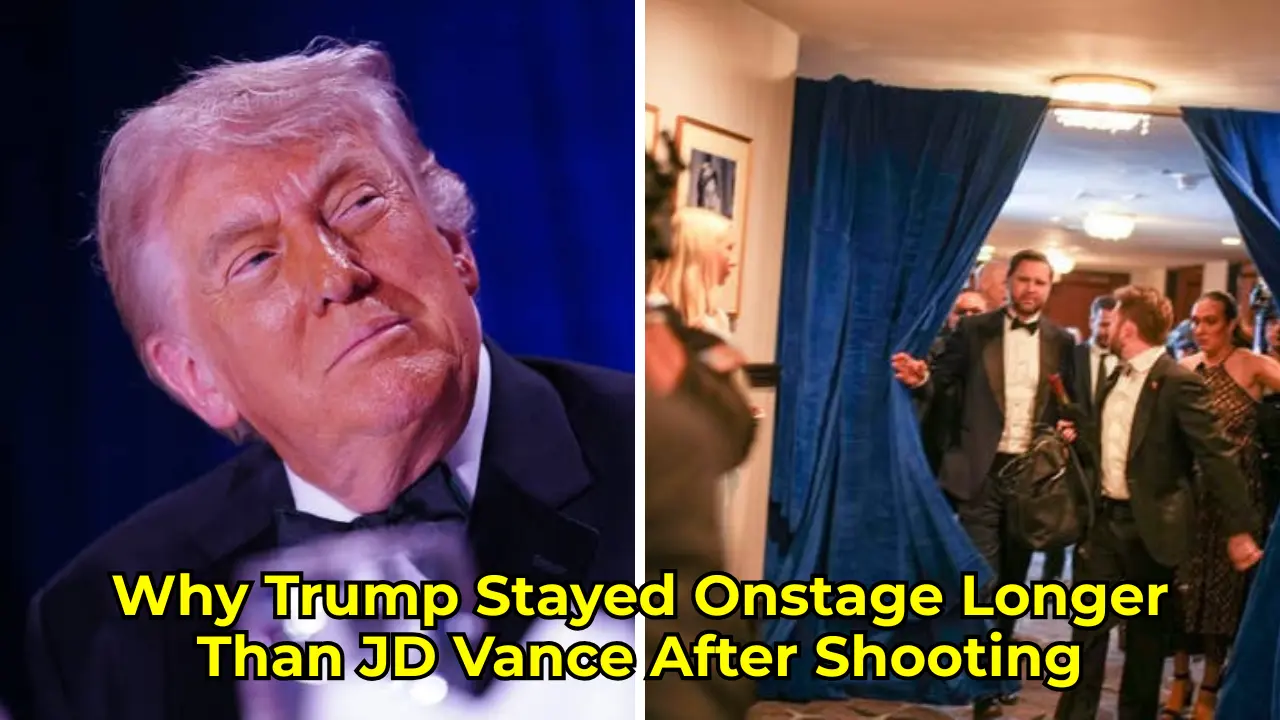
President Donald Trump suggested he may have intentionally slowed down U.S. Secret Service agents, causing Vice President JD Vance to be evacuated from the White House Correspondents’ Association dinner noticeably faster than the commander-in-chief following a nearby shooting.
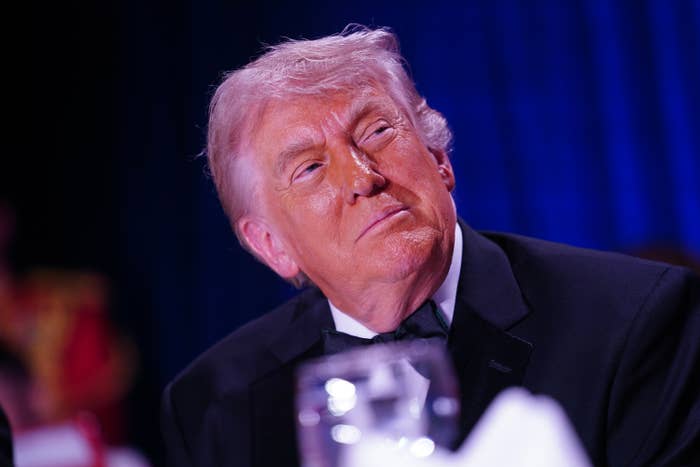
Nathan Howard / Getty Images
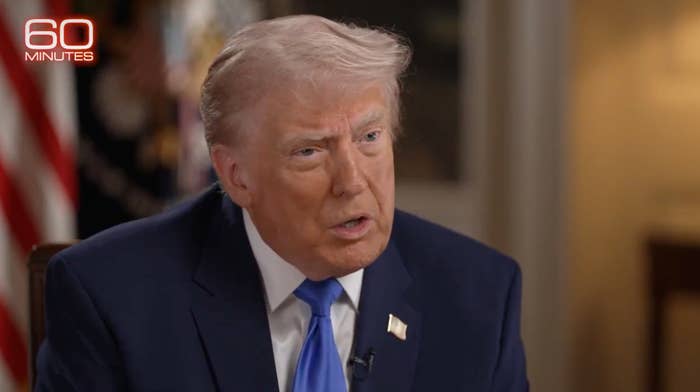
“I wanted to see what was happening,” Trump explained during a high-profile interview with 60 Minutes on Sunday. “And I wasn’t making it that easy for them. I wanted to see what was going on. And by that time, we started to realize maybe it was a bad problem,” he noted regarding the security breach.
CBS / Via x.com
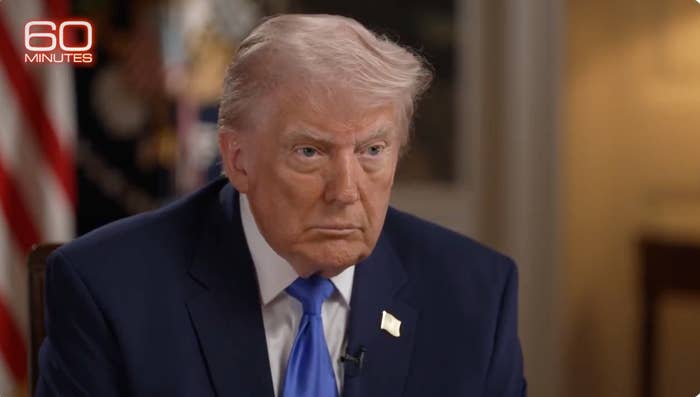
Trump commented on the frantic ballroom scene shortly after CBS anchor Norah O’Donnell pointed out that it took security details roughly 20 seconds longer to usher him offstage compared to his VP. “What was happening?” O’Donnell questioned. “Well, what happened is it was a little bit me,” Trump admitted.
CBS / Via x.com
Footage from the event depicts the audible sounds of gunfire echoing from outside the main ballroom while the president and first lady Melania Trump, alongside others at the head table, observed a performance by mentalist Oz Pearlman. Moments later, several agents emerged from the wings before accelerating their pace to surround the Trumps.
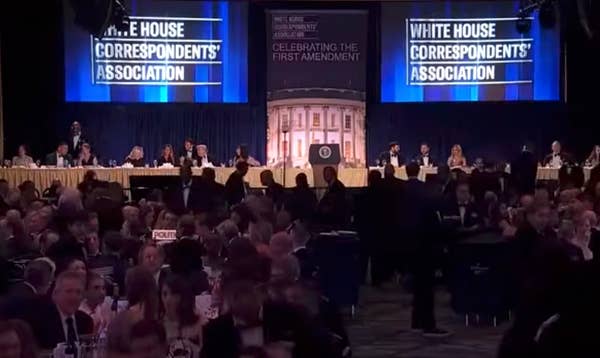
KCRA3 / Via youtube.com
Security personnel then assisted Trump from his chair before escorting him offstage behind a protective curtain. Vance had been rushed out about 20 seconds prior after agents grabbed him by his suit jacket while he was still seated and hurried him away from the dais. Trump told O’Donnell he felt “surrounded by great people” but claimed he forced the agents to “act a little bit more slowly.”
Andrew Harnik / Getty Images
“I said, ‘Wait a minute. Wait a minute. Let me see. Wait a minute,’” Trump recalled. The president further noted that as they exited, agents instructed him to “please go down on the floor.” He and the first lady took cover on the ground, he said, before rising shortly after to be led by the protective detail to a secure holding room.
President Trump said he “wasn’t making it that easy” for the Secret Service as it responded when shots rang out at the White House Correspondents’ Dinner, because he wanted to see what was going on. @NorahODonnell‘s interview with the President, tonight on 60 Minutes. pic.twitter.com/Us7RqmMqg2
— 60 Minutes (@60Minutes) April 26, 2026
CBS / Via x.com
As the current administration faces intense scrutiny regarding the reported lower level of security at the dinner compared to other presidential appearances, White House officials are scheduled to review security protocols this week for upcoming major events involving the president.
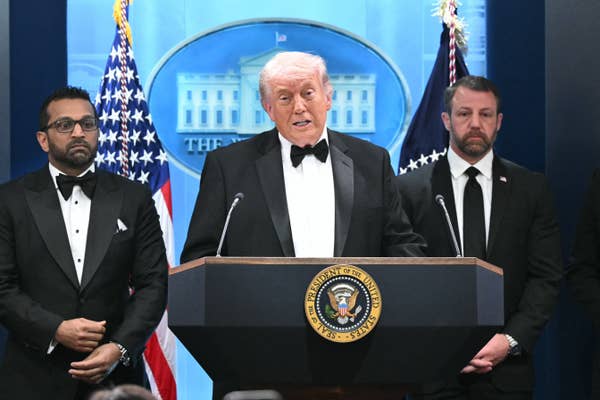
Mandel Ngan / Getty Images
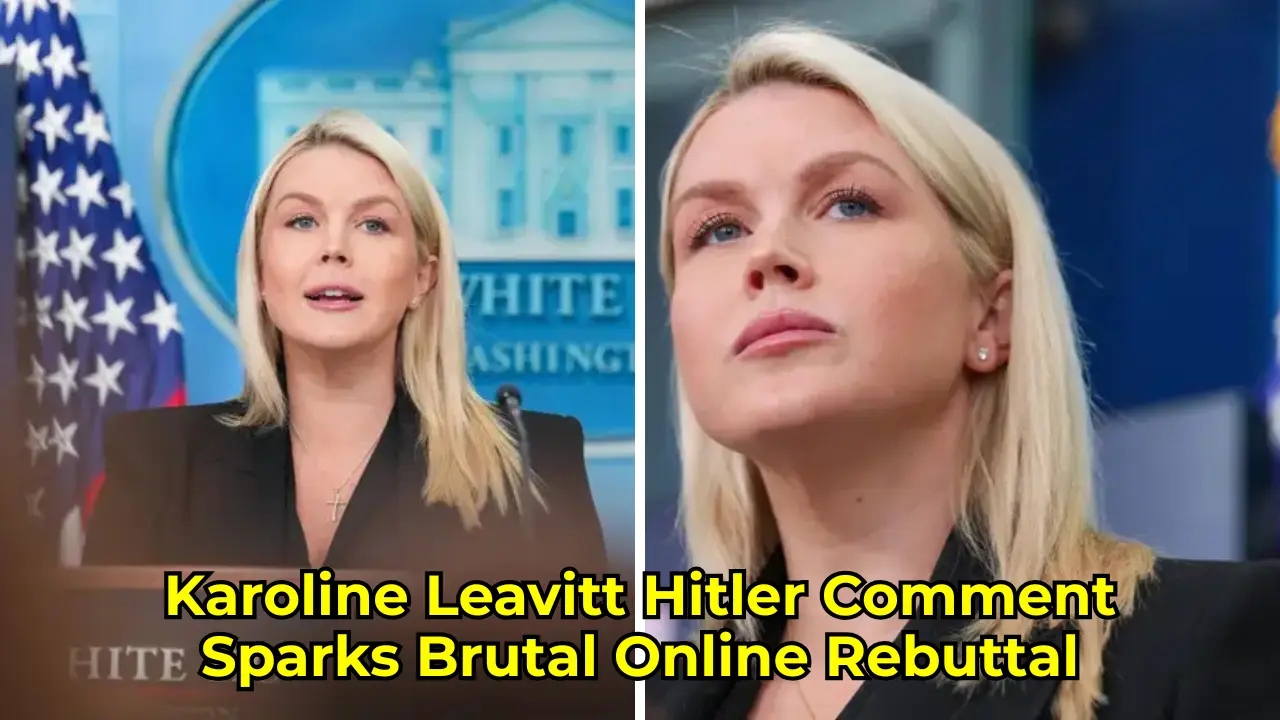
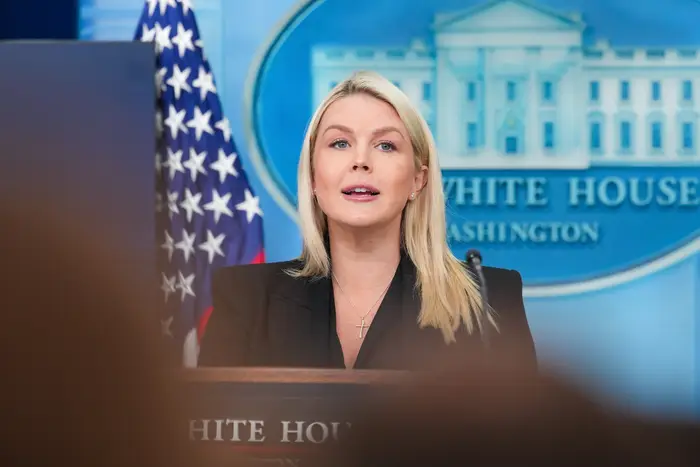
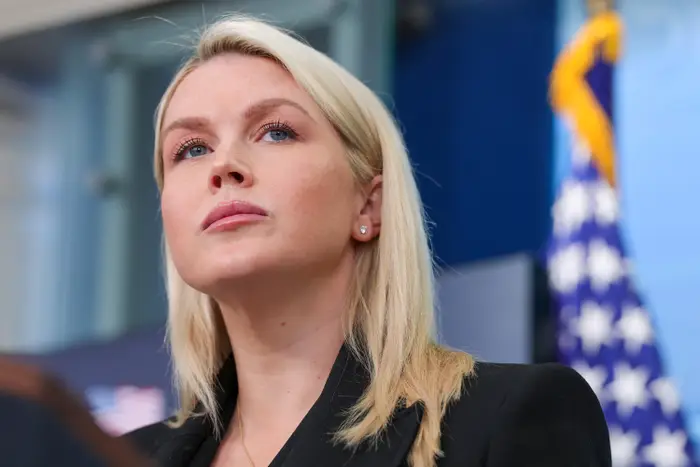
White House press secretary Karoline Leavitt on Monday tried to blame what she called a “left-wing cult of hatred” against President Donald Trump for political violence in the nation, including the shooting at Saturday’s White House Correspondents’ Association dinner.
Andrew Harnik / Getty Images
But one of her complaints caught the eyes and ears of critics. “Those who constantly falsely label and slander the president as a fascist, as a threat to democracy, and compare him to Hitler to score political points are fueling this kind of violence,” she declared.
Anna Moneymaker / Getty Images
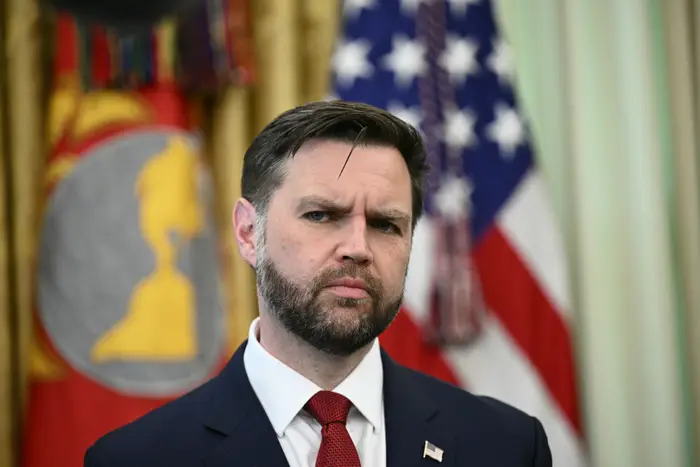
As many were quick to point out, one of the most prominent examples of someone comparing Trump to Hitler is already in the White House: Vice President JD Vance. In 2016, when Trump was running for president for the first time, Vance told a friend via private message that he wasn’t sure if Trump was “a cynical asshole like Nixon” or if he could be “America’s Hitler.”
Brendan Smialowski / Getty Images
Vance has since said he was wrong about Trump. But many are reminding Leavitt of what he said in the past:
In 2016, JD Vance suggested that Trump could be “America’s Hitler” https://t.co/gLmhUE4aDe pic.twitter.com/tRANtT2hYq
— PatriotTakes 🇺🇸 (@patriottakes) April 27, 2026
@patriottakes / Via x.com
https://t.co/aGNbxrAXTY pic.twitter.com/Ej6ftvLfYW
— aly кішка! ✙ (@mexic0la_) April 27, 2026
@mexic0la_ / Via x.com
https://t.co/yfsx5c0bTX pic.twitter.com/lwkyD9kQAq
— Turnbull (@cturnbull1968) April 27, 2026
@cturnbull1968 / Via x.com
His current VP is on record calling him America’s hitler in the past https://t.co/aHa0JUeah7
— Jason Bell 🇺🇸🦅 (@JBellSATX) April 27, 2026
@JBellSATX / Via x.com
Hmph. JD Vance compared Trump to Hitler https://t.co/z8DUkZLmjY pic.twitter.com/leTi8kQmWQ
— Fly Sistah 🪷 (@Fly_Sistah) April 27, 2026
@Fly_Sistah / Via x.com
so trump can call dems radicals and enemies of america and demonic and markists and say we hate god and america and his supporters can call for dems to be killed but mean old dems are the problem https://t.co/FVJkMD7dak
— Chris Roberts (@Robbins17Chris) April 27, 2026
@Robbins17Chris / Via x.com
He compares democrats to literal demons. Why is that okay? https://t.co/w1JjThnijX
— DancinInTheDownPour (@melknepp) April 27, 2026
@melknepp / Via x.com
Maybe he should stop acting like Hitler if he doesn’t like the comparisons. https://t.co/bwu6sxwJAn
— Jamarrius (@YungxJayy) April 27, 2026
@YungxJayy / Via x.com
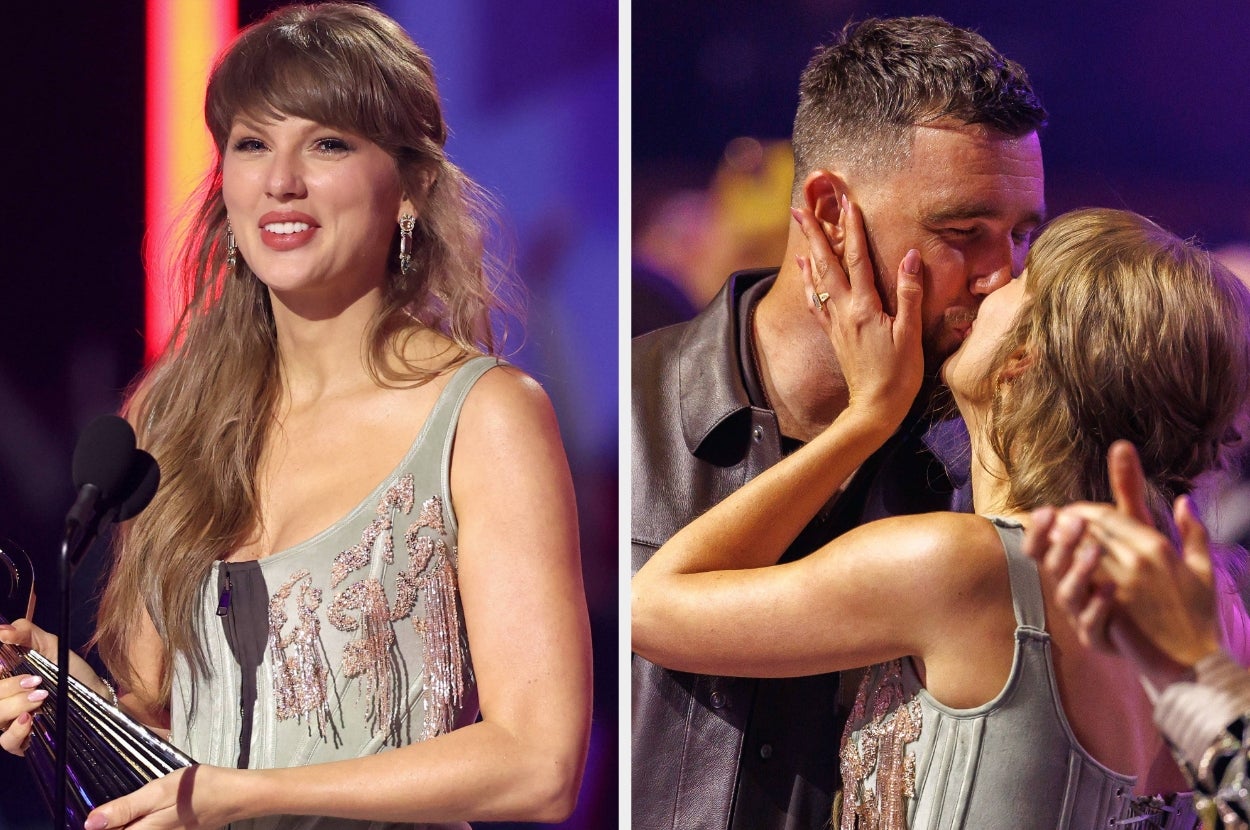
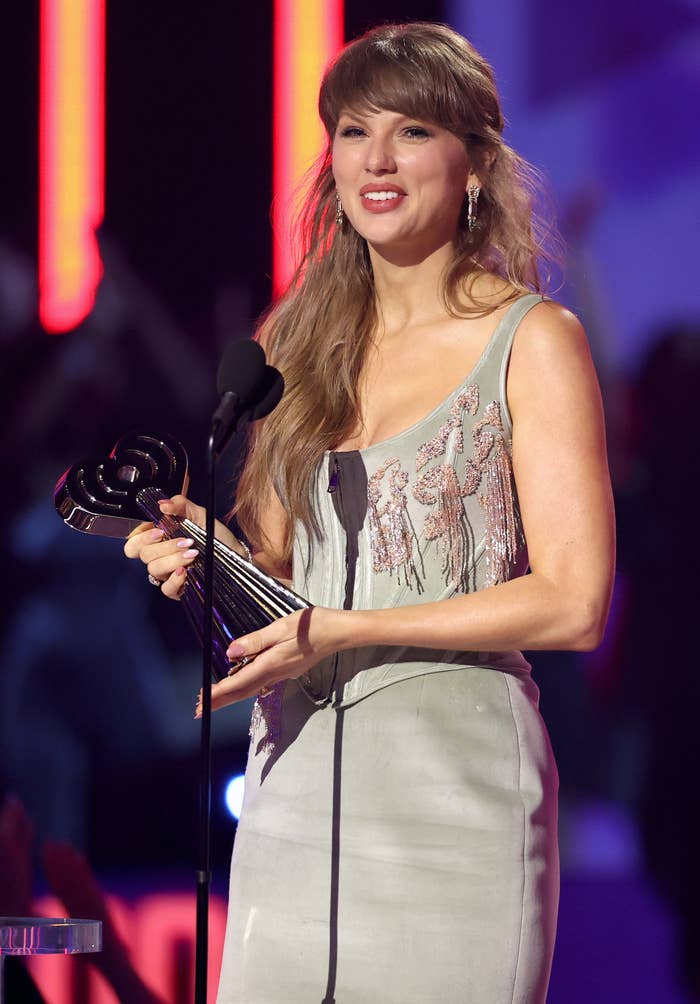
Taylor Swift has officially earned her spot on the New York Times list of the 30 Greatest Living American Songwriters, joining the ranks of icons like Mariah Carey, Nile Rodgers, and Jay-Z.
Monica Schipper / Getty Images
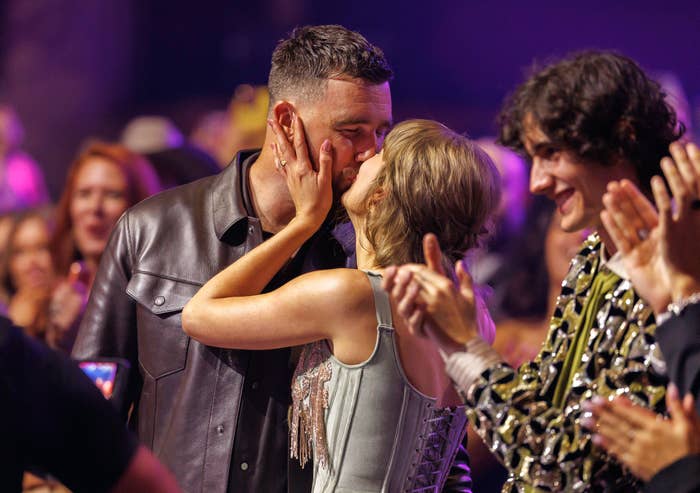
As Taylor’s massive discography has expanded, her dedicated fanbase has made it their mission to analyze every single lyric, hunting for secret clues about the singer’s private life.
Christopher Polk / Getty Images
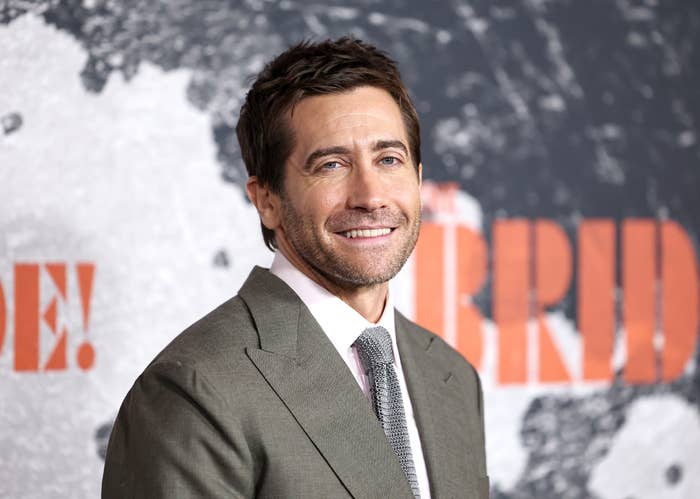
Take her iconic hit “All Too Well,” for instance. The lyrics, “I left my scarf there at your sister’s house, and you’ve still got it in your drawer even now,” sparked a viral investigation. Fans quickly deduced the scarf was left at Maggie Gyllenhaal’s house during Taylor’s relationship with Jake Gyllenhaal. The internet then collectively demanded the actor return the infamous accessory.
Jamie Mccarthy / Getty Images
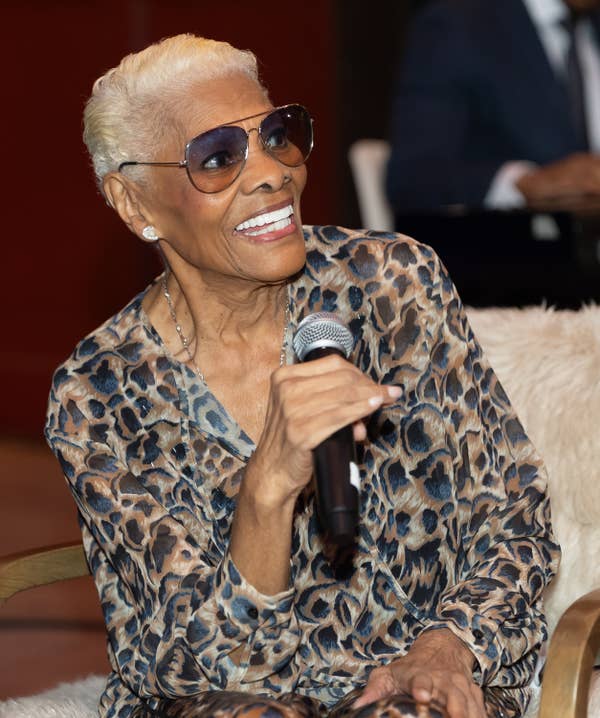
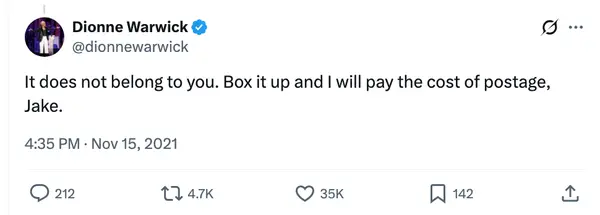
The scarf saga became so legendary that music royalty Dionne Warwick even weighed in on Twitter with a hilarious offer to help:
Mark Sagliocco / Getty Images
“If that young man has Taylor’s scarf he should return it.”

@dionnewarwick / Via x.com
“It does not belong to you. Box it up and I will pay the cost of postage, Jake.”
@dionnewarwick / Via x.com
In a recent interview with the New York Times, Taylor finally addressed the constant decoding of her work, confessing that the obsession with her personal life “can be a little bit weird.”
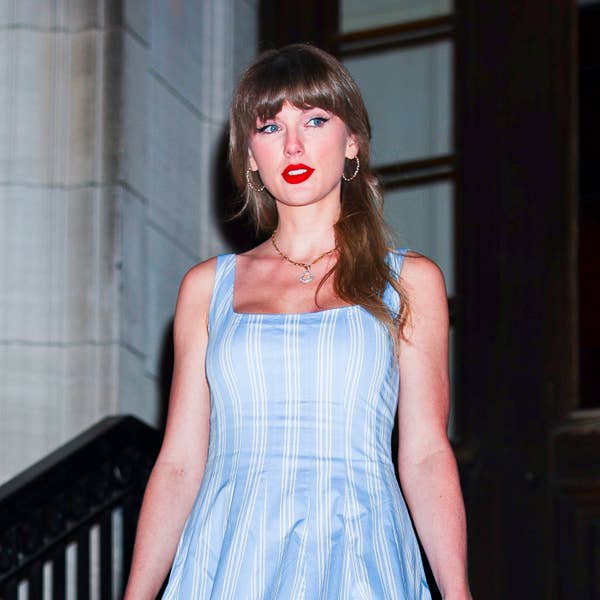
Aeon / Getty Images
“There’s corners of my fanbase who are gonna take things to a really extreme place,” Swift admitted. “There’s nothing I can do about that. There’s people who are gonna try to, like, do detective work, figure out the details — who is that about? What is this?”
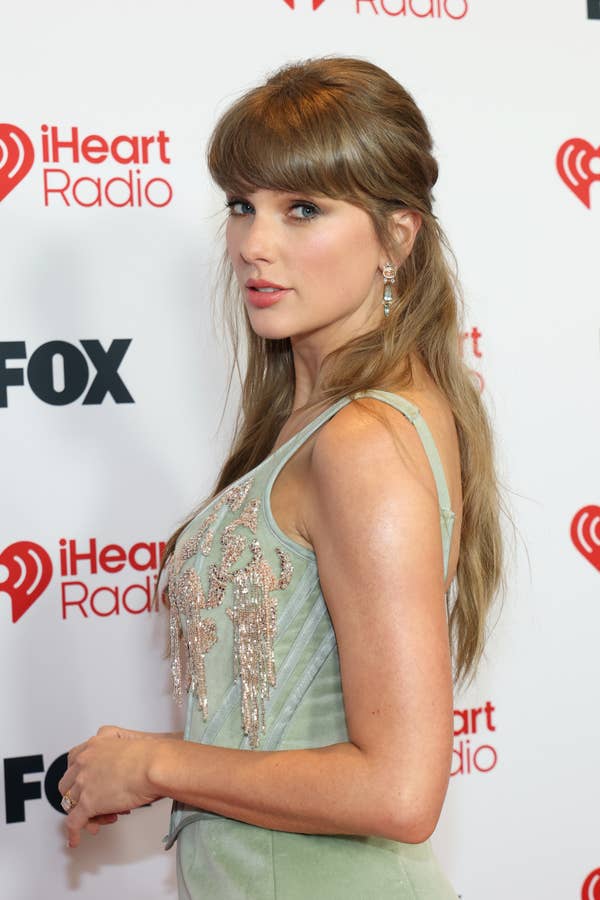
Kevin Mazur / Getty Images
“When it gets a little bit weird for me is when people act like it’s a paternity test,” she added. “Like, ‘This song’s about that person.’ Because I’m like, ‘That dude didn’t write the song, I did.’ But that’s part of it.”
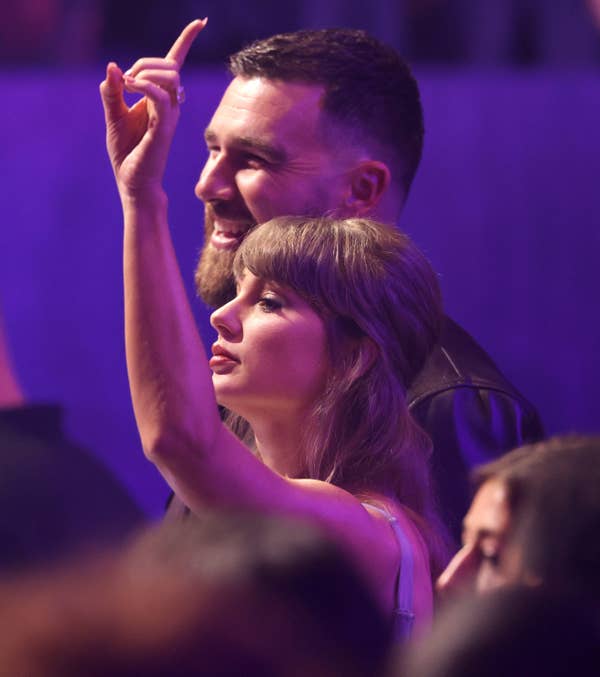
Robert Gauthier / Getty Images
Fans are currently split on Taylor’s take regarding these lyrical Easter egg hunts. For the most part, many listeners are backing her up:
“i think it’s very stupid when people waste their time trying to find out who a particular song is about.. like just enjoy the song”
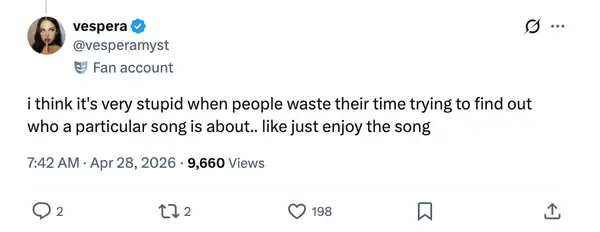
@vesperamyst / Via x.com
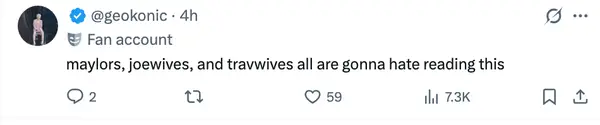
“maylors, joewives, and travwives all are gonna hate reading this”
@geokonic / Via x.com
“Thank you for calling us out”

@jadedmaroon / Via x.com
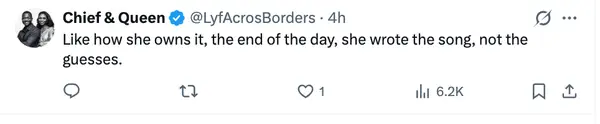
“Like how she owns it, the end of the day, she wrote the song, not the guesses.”
@LyfAcrosBorders / Via x.com
“Those people are the Swifties. And I am guilty I am one of that people”

@Filmfanatick / Via x.com
“People focus on the muse but ignore the creator… she clocked that”

@BIZBoost / Via x.com
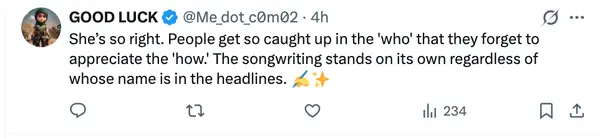
“She’s so right. People get so caught up in the ‘who’ that they forget to appreciate the ‘how.’ The songwriting stands on its own regardless of whose name is in the headlines.”
@Me_dot_c0m02 / Via x.com
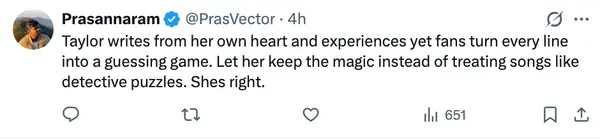
“Taylor writes from her own heart and experiences yet fans turn every line into a guessing game. Let her keep the magic instead of treating songs like detective puzzles. Shes right.”
@PrasVector / Via x.com
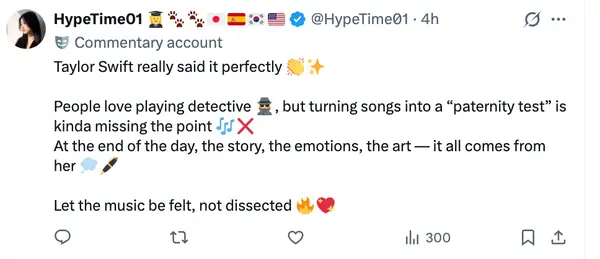
“Taylor Swift really said it perfectly People love playing detective , but turning songs into a ‘paternity test’ is kinda missing the point At the end of the day, the story, the emotions, the art — it all comes from her Let the music be felt, not dissected”
@HypeTime01 / Via x.com
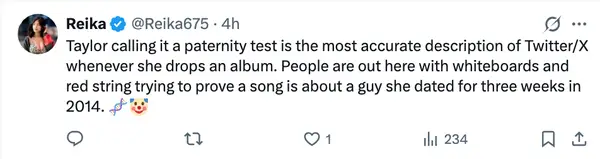
“Taylor calling it a paternity test is the most accurate description of Twitter/X whenever she drops an album. People are out here with whiteboards and red string trying to prove a song is about a guy she dated for three weeks in 2014.”
@Reika675 / Via x.com
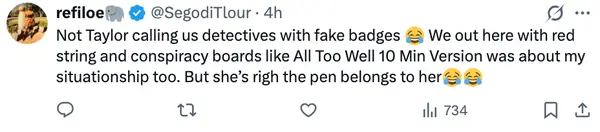
“Not Taylor calling us detectives with fake badges We out here with red string and conspiracy boards like All Too Well 10 Min Version was about my situationship too. But she’s righ the pen belongs to her”
@SegodiTlour / Via x.com
“I know some people in this fandom will be so mad…,lmao”

@DeborahYeboah16 / Via x.com
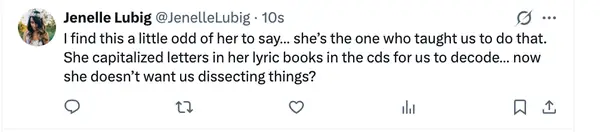
However, a different segment of the internet argues that Taylor herself encouraged this sleuthing behavior for years:
“I find this a little odd of her to say… she’s the one who taught us to do that. She capitalized letters in her lyric books in the cds for us to decode… now she doesn’t want us dissecting things?”
@JenelleLubig / Via x.com
“Taylor Swift needs to take her ego down a notch. Maybe her fanatic ‘swifties’ are all up in her business but the general public doesn’t care. Plus, songs and poems have always held a mysterious origin curiosity. Some are easy to figure out or the author says it. Others are secretive leaving the public to wonder. That’s the beauty of songs and poems.”
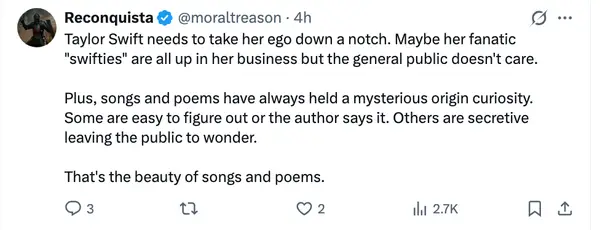
@moraltreason / Via x.com
“She literally leaves easter eggs everywhere and than says this girl, you trained them that way!”

@Claire8502 / Via x.com
“She trained detectives for years and now wants peace. Fair enough”

@WpFactory1 / Via x.com
Throughout her storied career, Taylor’s high-profile romances have been under a microscope. She has previously been linked to stars like Harry Styles, Joe Jonas, Matty Healy, and Joe Alwyn. During those eras, fans meticulously dissected her lyrics like a team of forensic experts to find any scrap of romantic tea.
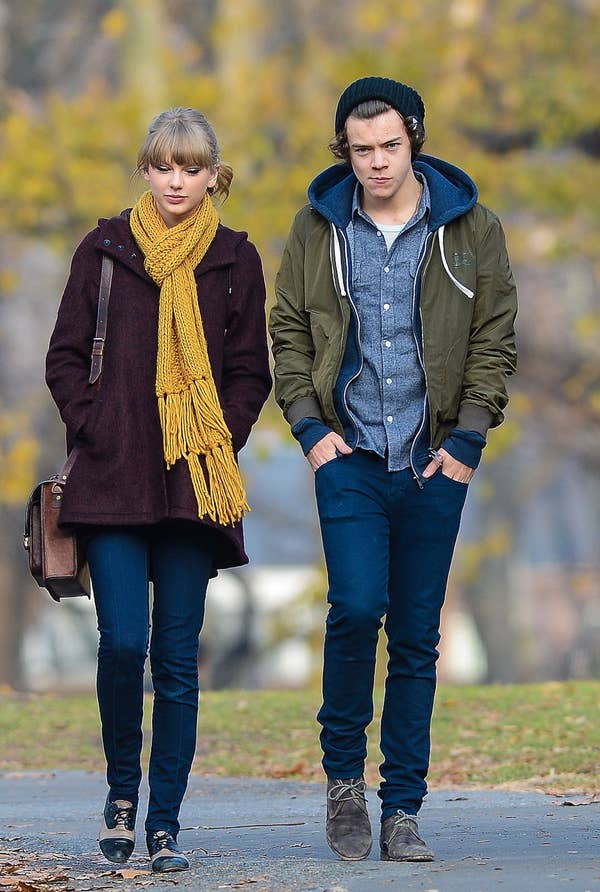
David Krieger / Getty Images
She is now happily engaged to NFL champion Travis Kelce and is in the midst of wedding planning. With fans affectionately calling them the “English teacher” and the “gym teacher,” it’s certain that their upcoming nuptials will be the most analyzed event in pop culture history.
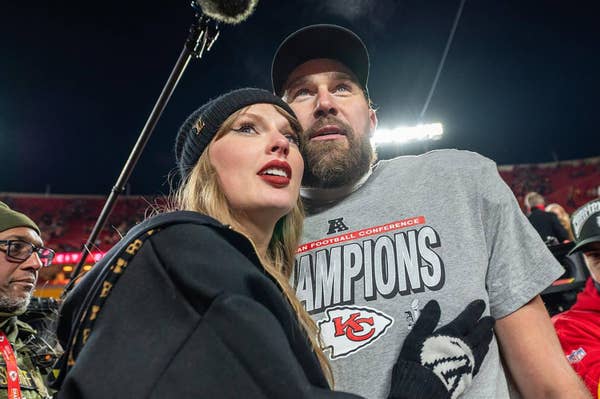
Kansas City Star / Getty Images
What do you think about Taylor’s thoughts on fans hunting for relationship clues in her music? Share your opinion in the comments below!

Billie Eilish Addresses Rumors of a Falling Out With Finneas

Why Trump Stayed Onstage Longer Than JD Vance After Shooting

Shannon Elizabeth OnlyFans Earnings: American Pie Star Wealth

Karoline Leavitt Hitler Comment Sparks Brutal Online Rebuttal

Lisa Kudrow Exposes Brutal Friends Behind the Scenes Secrets

Is Taylor Swift Calling Out Fans for Lyrical Paternity Tests?

Millie Bobby Brown Enola Holmes 3 Nails Spark Period Drama Row

Sabrina Carpenter & Madonna Coachella Crowd Sparks Backlash

Kylie Jenner Weeps After Watching KUWTK Pilot With Stormi

26 Painfully Awkward Celebrity Encounters That’ll Give You Secondhand Embarrassment

A Psychologist’s Guide to Narcissism: Strategies to Stop Trump

12 Actors Who Shared Awkward Details Filming Solo Sex Scenes

2026 Celebrity Breakups: Every Famous Couple Who Split So Far

Jada Pinkett Smith Alopecia Hair Regrowth Truth and Expert
-
 Celebrity7 days ago
Sabrina Carpenter & Madonna Coachella Crowd Sparks Backlash
-
 Celebrity4 weeks ago
Kylie Jenner Weeps After Watching KUWTK Pilot With Stormi
-
 Celebrity4 weeks ago
26 Painfully Awkward Celebrity Encounters That’ll Give You Secondhand Embarrassment
-
 News3 weeks ago
A Psychologist’s Guide to Narcissism: Strategies to Stop Trump
-
 Celebrity2 days ago
12 Actors Who Shared Awkward Details Filming Solo Sex Scenes
-
 Celebrity4 weeks ago
2026 Celebrity Breakups: Every Famous Couple Who Split So Far
-
 Celebrity4 weeks ago
Jada Pinkett Smith Alopecia Hair Regrowth Truth and Expert
-

 Celebrity4 weeks ago
Zendaya and Tom Holland Marriage Rumors and Romance Details